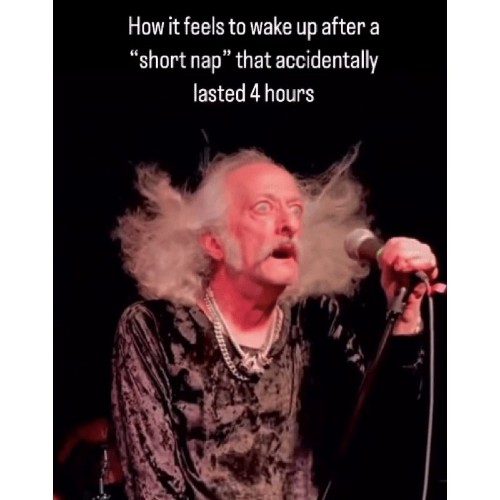
Short Nap?
Go Ahead, Get Yourself A Slice!


The 2025-2026 Best Places to Live rankings, as outlined by sources like U.S. News & World Report, evaluate 250 major U.S. cities based on criteria such as value (affordability, cost of living), desirability (resident satisfaction, amenities), job market strength (employment opportunities, economic stability), and quality of life (education, healthcare, safety, and recreation).
Cities are scored using a methodology that weighs these factors, often incorporating data from public sources like the U.S. Census Bureau, FBI crime statistics, and resident surveys.
For example, a city like Boise, Idaho, frequently ranks high due to its affordable housing, growing tech job market, access to outdoor recreation and high resident satisfaction.
Similarly, places like Raleigh, North Carolina, score well for their robust economies and family friendly environments. The exact rankings depend on how each city’s metrics (such as median home prices, unemployment rates, or school quality) stack up against others in the dataset.
Follow the link below to see a list of 250 best places to live!
During the University at Buffalo’s College of Arts and Sciences commencement ceremony on May 18th, 2025, graduate Jean Paul Al Arab, a criminology major, was chased across the stage by a university police officer after bringing his 6-month-old son, Mtanos, with him to collect his diploma.
Both were dressed in matching blue caps and gowns. The university’s rules prohibit anyone other than the graduating student from walking across the stage, citing safety and to avoid disruptions. Al Arab ignored multiple directives from event staff and police, leading to the brief foot chase.
A viral TikTok video showed him sprinting with his baby, shaking hands with officials and waving to a cheering crowd before being escorted off. Al Arab claimed it was a misunderstanding, stating he had asked about bringing his baby during a prep class.
The university decided not to penalize him, and he will receive his Bachelor of Arts degree as planned.
In an inspiring story of dedication and environmental consciousness, 36-year-old Damian Gordon from Australia’s Central Coast managed to purchase a two-bedroom house by recycling approximately 450,000 cans and bottles over seven years.
Utilizing New South Wales’ Return and Earn program, which offers 10 cents per eligible container, Gordon amassed around AU$70,000 (approximately €41,000 or $44,000 USD).
Initially, his recycling began as a way to unwind after work, collecting containers during beach walks and at music festivals. This habit grew into a significant endeavor, enabling him to save enough for a house deposit.
Even after achieving his goal, Gordon continues recycling to help with mortgage payments, demonstrating how consistent small actions can lead to substantial financial and environmental impacts.
Alan Davis, dubbed Seminole County’s “junk man,” has been a persistent thorn in the side of local authorities and neighbors for 25 years due to his cluttered, debris-laden yard in Altamonte Springs, Florida.
To mark the anniversary of his first county code violation in April 2000, Davis unveiled a provocative 6-foot-tall fiberglass sculpture of human buttocks, adding to a collection of similar sculptures he’s displayed over the years.
His property, overflowing with scrap metal, PVC pipes, rusted appliances, junked vehicles, and overgrown weeds, is both a personal statement and a legal battleground, as he claims his “art” is a First Amendment-protected protest against county regulations.
At the San Diego Humane Society’s Ramona Wildlife Center, staff are wearing bear costumes to rehabilitate a two-month-old orphaned black bear cub found alone in Los Padres National Forest on April 12th, 2025.
The cub, the youngest ever cared for by the center, was rescued after his mother didn’t return despite efforts to reunite them. To prevent the cub from bonding with humans, which could hinder his ability to survive in the wild, staff don bear masks, fur coats, and leather gloves, and rub themselves with black-bear-scented hay. This minimizes human imprinting, crucial for his eventual release in about a year.
The cub, initially fragile at three pounds, has gained nearly 10 pounds and is thriving with round-the-clock feeding and enrichment activities mimicking natural behaviors, like climbing and foraging.
The center, the only facility in San Diego County permitted to rehabilitate apex predators, relies on donations for its efforts, as it receives no state funding.
The 2025 Memorial Day weekend marked a historic box office, driven by Disney’s live-action Lilo & Stitch and Paramount’s Mission: Impossible – The Final Reckoning starring Tom Cruise.
Lilo & Stitch grossed an estimated $183 million domestically over the holiday, setting a new record for the biggest Memorial Day weekend opener, surpassing Top Gun: Maverick’s $160 million in 2022. The film, with a $100 million budget, also earned $341.7 million globally, fueled by strong appeal among families, Gen Z, and younger Millennials, particularly teenage girls and women, with 41% Latino and Hispanic audiences. It scored a 72% Rotten Tomatoes rating and an “A” CinemaScore.
Mission: Impossible – The Final Reckoning opened with $78 million domestically over four days, a franchise-best, beating Fallout’s $61.2 million. It grossed $190 million worldwide, with a 79% Rotten Tomatoes score and an A- CinemaScore. The film’s success was boosted by Cruise’s star power and a strong social media presence, though some criticized its fan-service-heavy approach.
Together, the films propelled the weekend to a record $325 million in U.S. and Canada ticket sales, topping 2013’s $314 million. The diverse audience appeal (Lilo & Stitch for families and younger viewers, Mission: Impossible for adults over 25) drove this success, signaling a robust recovery for theaters post pandemic.
Let’s take a trip down memory lane to a time when “going online” wasn’t even a phrase.
Back then, life moved at a different rhythm. Without instant access to information, we had to wait for things. Want to know the weather? You caught the forecast on the evening news or checked the newspaper. Curious about a random fact? You’d dig through an encyclopedia (those giant, dusty books on the shelf) or ask someone who might know. There was no Google to settle debates in seconds, so arguments at the dinner table could last for days! (Or at least until someone got to the library)
I remember spending hours at the local library, flipping through card catalogs and scanning microfiche to research school projects. It wasn’t efficient, but there was something satisfying about the hunt. You felt like a detective piecing together clues. And when you found that perfect book or article? Pure victory.
Before social media, connecting with people meant actually seeing them. If you wanted to catch up with a friend, you called their house (and prayed their parents didn’t answer) or showed up at their door. Long-distance friendships? You wrote letters. Actual, handwritten letters. I can still smell the ink and feel the crinkle of paper as I sealed an envelope, wondering when my pen pal would write back. Weeks could pass before you got a reply, but when that letter arrived, it was like Christmas morning.
We hung out in person, too. The mall was our social network, where we’d roam in packs, share gossip over greasy food court fries and check out the latest CDs at the record store. There was no texting to coordinate plans—just a vague “meet me by the fountain at 3.” If someone was late, you waited. Or you left. No one was glued to a screen, so we were fully present, for better or worse.
Entertainment before the internet was a hands-on experience. Without streaming services, we relied on Blockbuster runs for movie nights, flipping through TV channels (all seven of them), or listening to the radio, hoping your favorite song would come on. I’d sit by my boombox with a blank cassette, finger hovering over the “record” button, ready to capture that one song before the DJ cut in. Mixtapes were our Spotify playlists and making one for someone was a labor of love.
Video games existed, but they were simpler. My Nintendo Entertainment System was a prized possession and blowing into cartridges to “fix” them was a sacred ritual. You didn’t have online walkthroughs, so you either figured out that boss level through trial and error or begged your older sibling for tips.
Without the internet, the world felt both bigger and smaller. Bigger because information wasn’t at your fingertips, so faraway places seemed mysterious, pieced together from travel brochures, National Geographic, or stories from that one friend who went on a cruise. Smaller because your world was your neighborhood, your school, your town. News traveled slowly and global events felt distant unless they hit the front page or the nightly broadcast.
There was no 24/7 news cycle to overwhelm you, no algorithm feeding you endless opinions. But that also meant you could miss things. If you didn’t catch the news or hear it through the grapevine, you were out of the loop. Ignorance was bliss, but it could also leave you clueless.
Don’t get me wrong, life before the internet wasn’t perfect. Research was a slog, miscommunication was rampant, and if you got lost driving, you were stuck unfolding a giant map or asking a gas station clerk for directions. But there was a certain magic in the slowness. You had to be patient, resourceful and present. You lived in the moment because there wasn’t a digital escape hatch in your pocket.
I’m not saying I’d trade my smartphone for a rotary phone (okay, maybe for a day), but there’s something about that pre-internet life that feels worth remembering. It was messier, slower, and sometimes frustrating, but it forced us to connect with the world in a way that felt raw and real.
So, do you remember life before the internet? Or if you don’t, can you imagine it? Drop a comment and share your thoughts!


 The Social Pie Network!