A Global Coffee Craze?

Every day, the world wakes up to the aroma of roughly 2.5 billion cups of coffee. That’s right—billion with a “B.” This staggering number isn’t just a testament to our collective caffeine addiction but a window into how coffee has woven itself into the fabric of cultures, economies and daily routines across the globe.

From the bustling streets of Tokyo to the cozy cafés of Paris, coffee is more than a beverage—it’s a ritual.

In Ethiopia, where coffee’s story began centuries ago, traditional ceremonies involve roasting beans over an open flame, a practice that’s as much about community as it is about the drink.

In Italy, an espresso shot is a quick, standing affair at the bar, while in the U.S., oversized lattes fuel long workdays.

Despite these differences, the global average of 2.5 billion cups daily shows coffee’s unmatched ability to transcend borders and unite people.

Let’s break it down: 2.5 billion cups a day translates to about one cup for every three people on the planet. That’s roughly 900 billion cups annually, enough to fill over 300,000 Olympic-sized swimming pools. The U.S. alone accounts for about 400 million cups daily, while countries like Finland and Norway lead per capita consumption, with some Finns sipping up to 12 kilograms of coffee per year. Whether it’s a frothy cappuccino, a bold black brew, or an iced concoction, coffee’s versatility keeps it in demand.

So, why do we drink so much of it? Beyond the obvious caffeine kick, coffee is a social glue. It’s the excuse for a first date, a business meeting, or a catch-up with friends. Scientifically, caffeine boosts alertness and focus, making it a go-to for students, professionals and anyone facing a morning slump. Plus, coffee’s rich flavor profiles—nutty, fruity, or chocolatey—offer something for every palate, thanks to diverse growing regions like Colombia, Brazil, and Vietnam.

This massive consumption comes with impacts. Coffee farming supports millions of livelihoods, especially in developing nations, but it also raises concerns about sustainability, fair trade and environmental costs. From deforestation to water usage, the journey from bean to cup isn’t always smooth. Yet, initiatives like shade-grown coffee and ethical sourcing are gaining traction, reflecting a growing awareness of these issues among consumers.

Next time you sip your morning brew, consider this: you’re one of billions sharing in a global tradition. Those 2.5 billion cups represent moments of connection, productivity and joy. So, whether you’re a pour-over purist or an instant-coffee loyalist, raise your mug to the drink that keeps the world spinning!

The Food Fight Returns!

The Gran Tomatina festival in Sutamarchán, Boyacá, is a lively celebration where thousands pelt each other with overripe tomatoes, turning the streets into a red, juicy mess.

The 15th edition, held recently on June 1st, 2025, marked a vibrant return after years of suspension due to the COVID-19 pandemic and high tomato prices.

Inspired by Spain’s La Tomatina, the event celebrates the town’s tomato-driven economy and draws over 20,000 visitors for a weekend of tomato fights, music, parades, and cultural activities.

Using 45 tons of tomatoes unfit for consumption, the festival includes a 15-minute kids’ battle and a 45-minute adult throwdown in the municipal stadium, alongside cabalgatas, ciclopaseos, and fireworks.

It’s a messy, joyful tribute to community and local agriculture!

STORY IS HERE

The Heimlich Maneuver!

On June 1st, 1974, a groundbreaking moment in medical history occurred when Dr. Henry J. Heimlich, a Cincinnati-based thoracic surgeon, published an article in Emergency Medicine magazine introducing the Heimlich Maneuver. This simple yet revolutionary first-aid technique, designed to dislodge blockages from the windpipe, transformed the way choking emergencies were handled and has since saved countless lives worldwide. Titled “Pop Goes the Café Coronary,” the article outlined a procedure that required no specialized equipment, making it accessible to both medical professionals and laypeople. Let’s dive into the significance of this publication and its lasting impact.

Before 1974, choking was a major cause of death in the United States, with thousands of fatalities annually due to airway obstructions, often mistaken for heart attacks—hence the term “Café Coronary.” Traditional medical interventions, like tracheostomies, were invasive, required specialized training and were often impractical in emergency settings. Dr. Heimlich, driven by the need for a simpler solution, developed a technique that involved applying sudden, upward pressure on the abdomen, just below the ribcage, to force air from the lungs and expel the blockage.

Heimlich’s research began with experiments on anesthetized Beagles, where he safely tested the procedure over 20 times on each subject. The results were promising, giving him confidence that the technique could work on humans. In his Emergency Medicine article, Heimlich wrote, “What’s really needed then is a first-aid procedure that doesn’t require specialized instruments or equipment and can be performed by any informed layman—or even considered by a physician before resorting to tracheostomy with its attendant hazards.” This vision of accessibility was key to the maneuver’s eventual widespread adoption.

The June 1, 1974, article in Emergency Medicine was a pivotal moment. Titled “Pop Goes the Café Coronary,” it introduced the technique in an informal yet compelling way, emphasizing its simplicity and effectiveness. Heimlich explained how abdominal thrusts could dislodge a foreign object by using the body’s own air pressure, offering a non-invasive alternative to existing methods. The article’s publication marked the first time the maneuver was shared with the medical community and the public, sparking immediate interest.

The Heimlich Maneuver quickly gained traction. By August 1974, an editorial in The Journal of the American Medical Association officially named it the “Heimlich Maneuver,” noting that it had already saved numerous lives in just two months. Over the decades, the technique became the standard for choking rescue, endorsed by organizations like the American Heart Association and the American Red Cross, though guidelines evolved over time. For instance, from 1976 to 1985, back blows were recommended before abdominal thrusts, but by 1986, the Heimlich Maneuver became the sole recommended method for conscious choking victims.

While the Heimlich Maneuver is celebrated, it hasn’t been without controversy. In 2003, Dr. Edward Patrick, a colleague, claimed to be an uncredited co-developer, though Heimlich’s name remained synonymous with the technique. Additionally, Heimlich’s later advocacy for using the maneuver in drowning cases was criticized as unproven and potentially dangerous, leading to warnings from the American Heart Association in 2005. Despite these debates, the maneuver’s core application for choking remains undisputed.

The publication of the Heimlich Maneuver on June 1, 1974, was a turning point in emergency medicine. Dr. Heimlich’s innovation empowered ordinary people to save lives in moments of crisis, democratizing first aid in a way few other techniques have. From restaurants to homes, the maneuver has become a household name, a symbol of quick thinking and human ingenuity. As we reflect on this milestone, it’s clear that Heimlich’s work, first shared in that humble Emergency Medicine article, continues to resonate, saving lives and inspiring hope 50 years later.

MORE INFO HERE

Finger Lickin’ Good?

On March 20th, 1930, a pivotal moment in culinary history unfolded that would eventually give rise to one of the most iconic fast-food chains in the world: Kentucky Fried Chicken, or KFC for short. This date marks the day Harland David Sanders, a man of grit and determination, took a significant step toward building his fried chicken legacy.

Born on September 9th, 1890, in Henryville, Indiana, Harland Sanders was no stranger to hard work. After losing his father at a young age, Sanders took on various jobs throughout his life. He was a farmhand, streetcar conductor, blacksmith’s apprentice and railroad fireman, just to name a few. By 1930, he had settled in Corbin, Kentucky, where he operated a service station along U.S. Route 25, a busy road for travelers. It was here that Sanders began to lay the groundwork for what would become his fried chicken empire.

While March 20th, 1930, is often cited as a key date in KFC lore, it doesn’t mark the official founding of the KFC franchise as we know it today. Instead, it’s the day Sanders is said to have first served his now famous fried chicken to customers at his service station. At the time, Sanders wasn’t running a restaurant in the traditional sense. He began cooking for hungry travelers who stopped by for gas, offering home cooked meals like pan fried chicken, ham, biscuits and vegetables. His food quickly gained a reputation for its quality and flavor, especially his chicken, which he prepared using a blend of spices that would later become the cornerstone of KFC’s “Original Recipe.”

Sanders’ cooking wasn’t an overnight sensation. By 1930, he had perfected a method of pressure frying chicken, which cooked it faster than traditional methods while keeping it juicy and flavorful. This innovation, combined with his secret blend of 11 herbs and spices, set his chicken apart from anything else on the market.

The success of his roadside meals led Sanders to expand his operation. He soon opened a small dining area next to the service station, calling it “Sanders Court & Café.” It wasn’t a franchise yet, but it was the precursor to KFC. The café became a local hit, drawing in travelers and residents alike. In 1935, Kentucky Governor Ruby Laffoon recognized Sanders’ contributions to the state’s cuisine by commissioning him as a Kentucky Colonel. This would be an honorary title that Sanders would later embrace as part of his public persona.

While this historic day in 1930 marks the beginning of Sanders’ fried chicken journey, the KFC franchise as we know it didn’t come into being until much later. In 1952, Sanders struck a deal with Pete Harman, a restaurant owner in Salt Lake City, Utah, to sell his chicken under the name “Kentucky Fried Chicken.” This was the first true franchise, and it launched the brand into national prominence. Sanders sold the company in 1964 for $2 million (about $18 million in today’s dollars), but he remained its public face, donning his signature white suit and black tie until his death in 1980.

So, the next time you bite into a piece of KFC, remember that it all traces back to a dusty service station in Corbin, Kentucky, and a man with a vision, flipping chicken on March 20th, 1930. The day that started the meal and an entire movement.

Weird Or Wonderful?

Food is a universal language, but sometimes it speaks in accents we don’t quite expect. In a recent survey of Americans, some truly bizarre yet beloved food pairings came to light. From pickles wrapped in cheese to ice cream melting over meatloaf, these combinations might sound like culinary chaos. For others, they’re pure comfort. Let’s dive into a few of these quirky creations and explore what makes them tick.

Imagine this: a crisp, juicy pickle spear, snugly wrapped in a slice of creamy cheddar or a blanket of melted mozzarella. It’s salty, it’s sour, it’s rich and for fans of this combo, it’s perfection. The contrast of the pickle’s sharp bite with the smooth, mellow cheese creates a snack that’s oddly satisfying. Some even call it a low-carb alternative to a sandwich. Have you ever tried it? Or does the thought alone make your taste buds recoil?

Next up, we’ve got popcorn with beans. Yes, you read that right. Picture a bowl of fluffy, buttery popcorn tossed with a handful of baked beans. They could be pinto, black, or even chili spiced. It’s a mashup of textures: the light crispness of popcorn against the soft, hearty beans. Survey respondents say it’s a go to for movie nights when you can’t decide between salty and substantial. It’s quirky, sure, but there’s something about it that feels like a warm hug in snack form.

And then there’s the real head scratcher: ice cream on meatloaf. This one sounds like a dare gone wrong, but for its devotees, it’s a revelation. A slice of warm, savory meatloaf topped with a scoop of vanilla (or maybe even chocolate) ice cream creates a wild dance of hot and cold, sweet and salty. Think of it like a deconstructed dessert and dinner plate all in one. Is it genius or just plain weird? The survey says there’s a small but passionate group who swear by it.

These surprising pairings prove that when it comes to food, Americans aren’t afraid to break the rules. Whether it’s the thrill of experimentation or a nostalgic craving from childhood, these combos remind us that taste is personal. So, what’s your wildest food combination guilty pleasure? Maybe it’s peanut butter on pizza or ketchup-dipped cookies. Whatever it is, you’re not alone in your culinary creativity!

Inflation Proof?

Imagine this: It’s 1999, and you’re clipping a coupon from your Midwest newspaper for a Domino’s large one topping carryout pizza. The price is $6.99.

Fast forward to 2025, and you’re scrolling Dominos.com, snagging the same deal for $7.99. Just a buck more in 26 years?

While Big Macs and Taco Bell tacos have doubled or tripled in price, Domino’s seems to defy inflation. So, is their pizza truly inflation proof?

Follow the link and read the story from our friends at The Hustle to find out!

STORY IS HERE

Pineapple On Pizza?

Few topics in the culinary world ignite as much passion (or outright chaos) as the question of pineapple on pizza. Known as the Hawaiian pizza (despite its questionable Hawaiian credentials), this topping combo of sweet, juicy pineapple and savory, melty cheese has been dividing pizza lovers since its inception. So, should pineapple be allowed on pizza? Let’s slice into the debate, weigh the pros and cons and see if we can find some common ground. Or do we agree to disagree over a hot slice?

Let’s start with the pro-pineapple camp, because I’ll admit that I’m a bit of a convert. Pineapple on pizza brings something unique to the table: a burst of sweetness that cuts through the richness of cheese and the saltiness of toppings like ham or pepperoni. It’s a flavor contrast that works in the same way a drizzle of honey elevates a charcuterie board, or a splash of balsamic glaze transforms a Caprese salad. Sweet and savory isn’t a new concept. I mean, it’s a classic for a reason.

The texture’s another win. Those golden chunks of pineapple add a juicy, tender bite that complements the crisp crust and gooey cheese. When paired with ham or Canadian bacon (as in the classic Hawaiian style), it’s a nod to surf and turf vibes. There’s land and sea, sweet and salty, all in one bite. Plus, it’s a mood lifter. There’s something inherently fun and rebellious about pineapple on pizza! It’s the topping that says, “I don’t play by the rules and I’m delicious doing it.”

On the flip side, the anti-pineapple crowd has some strong arguments, and I get it. The pizza traditionalists aren’t wrong to clutch their pearls. Pizza, at its core, is an Italian masterpiece born from simple, harmonious ingredients: dough, tomato sauce, mozzarella, maybe some basil or a sprinkle of oregano. Pineapple feels like an interloper, a tropical gatecrasher at a Mediterranean party. For purists, it’s not just a topping, but rather a betrayal of pizza’s soul.

Then there’s the practical gripe: pineapple can make pizza soggy. Its high water content seeps into the crust, turning a perfectly crisp base into a mushy mess if not handled with care. And let’s talk about taste. Some people argue that the sweetness overwhelms the balance, clashing with the tangy sauce and savory toppings rather than complementing them. “Pizza’s not dessert!” the detractors cry, and they’ve got a point here. We agree there’s a line between innovation and absurdity, and pineapple might just be tiptoeing over it.

So, should pineapple be a pizza topping? Yes, because it can be, and plenty of people love it. I include myself inthis grouping on the right day. But if you’re a staunch traditionalist who thinks it’s an abomination, I respect your right to a pineapple free pie. The real magic of pizza is that there’s room for all of us at the table. We welcome the purists, rebels and everyone in between. Just don’t ask me to share my slice.

Time To Celebrate!

Happy National Cereal Day, everyone!

Today marks the annual celebration of one of the world’s most beloved breakfast staples. Whether you’re a fan of crispy flakes, sugary puffs, or hearty granola, this day is all about honoring the bowlfuls of joy that have fueled mornings (and late night snacks) for generations.

So, grab your favorite box, pour some milk (we’re not here to judge if you skip the milk) and let’s dive into why National Cereal Day deserves a spot on your calendar.

While the exact origins of National Cereal Day are a bit murky (no official proclamation exists), it’s widely recognized every March 7th as a nod to cereal’s enduring legacy.

Cereal as we know it began in the late 19th century, thanks to pioneers like Dr. John Harvey Kellogg and his brother Will Keith Kellogg. What started as a health food experiment at their Battle Creek, Michigan sanitarium turned into a global phenomenon. Corn Flakes, introduced in 1894, were the spark that ignited a breakfast revolution and the next thing you know, cereal became a household name.

Let’s be real: cereal is a cultural icon. It’s the breakfast of champions (thanks, Wheaties!), the midnight munchie of choice and a lifesaver for anyone too busy to cook. It’s versatile so it can be eaten dry, soaked in milk, or even sprinkled over yogurt. There’s a cereal for every mood, from the wholesome bran flakes that scream “I’m adulting” to the neon colored loops that whisper “I’m still a kid at heart.”

Not sure how to mark the occasion? Here are a few ideas to make March 7th extra delicious:

Try a New Cereal: Step out of your comfort zone. If you’re a die-hard Cheerios fan, give a quirky, limited edition flavor a whirl. The cereal aisle is a treasure trove of surprises.

Host a Cereal Party: Invite friends over, have everyone bring their favorite box and set up a cereal bar. Bonus points for pairing them with unexpected milks like almond, oat, or even chocolate.

Get Creative: Use cereal in a recipe. We’re thinking cereal crusted French toast, homemade granola bars, or a crunchy topping for ice cream.

Nostalgia Trip: Revisit the cereal of your childhood. Pour yourself a bowl and let the memories flood back.

Share the Love: Post a photo of your cereal setup on social media with #NationalCerealDay. Spread the joy and see what others are eating!

So, here’s to cereal! It really is the unsung hero of breakfast. Whether you’re team soggy or team crispy, let’s raise a spoon to National Cereal Day 2025. What’s your favorite way to enjoy it? You can let us know in the comments!

Is It Crispy?

Over the past decade, the use of “crispy” and “crispiness” in Yelp restaurant reviews has jumped by 20 percent in the U.S., according to data floating around from folks like Bon Appétit who’ve dug into the trend.

It’s not just random chatter either as it reflects how much people obsess over texture in food. “Crispy” isn’t just a buzzword, guys, it’s a sensory hook.

Studies from way back, like Alina Szczesniak’s work at General Foods in the ‘50s, show crispiness is a big deal psychologically as it keeps you eating, triggers that satisfying crunch sound and signals freshness or quality. Yelp’s a goldmine for spotting this shift because it’s where people gush (or gripe) about their meals in real time.

Why the uptick? It seems that part of might be cultural. We have fried chicken sandwiches, potato chips and all sorts of crispy innovations that continue to have moments.

Social media amplifies it as well with those viral food pics where the crisp factor is front and center. Plus, restaurants are engineering it on the daily! Chefs tweak batters or frying techniques to hit that texture sweet spot and diners notice.

On Yelp, “crispy” often pops up praising wings, fries, or even fancy stuff like “inverted crispy pork skin” from high end spots. It’s less about the word itself and more about what it promises…We all want that bite that delivers!

Food Post Friday!

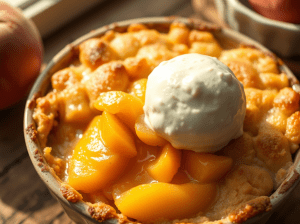
In celebration of country singer Jason Aldean’s birthday on February 28th, here’s a recipe inspired by his Southern roots: Peach Cobbler.

This classic dessert reflects the flavors of his hometown, Macon, Georgia.

Ingredients:

  • 1 cup all purpose flour
  • 1 cup granulated sugar
  • 1 cup milk
  • 2 teaspoons baking powder
  • 1/2 teaspoon salt
  • 1/2 cup unsalted butter
  • 4 cups fresh or canned peach slices
  • 1 tablespoon lemon juice
  • Ground cinnamon (optional)

Instructions:

  1. Preheat the oven to 375°F (190°C).
  2. Place the butter in a 9×13 inch baking dish and melt it in the preheating oven.
  3. In a medium bowl, combine flour, sugar, baking powder, and salt.
  4. Stir in milk until the batter is smooth.
  5. Pour the batter over the melted butter in the baking dish; do not stir.
  6. In a saucepan, mix peach slices with lemon juice and heat until warm.
  7. Spoon the peaches over the batter; again, do not stir.
  8. Sprinkle with cinnamon if desired.
  9. Bake for 40-45 minutes or until the top is golden brown.
  10. Serve warm, optionally with a scoop of vanilla ice cream.