
For The Weekend!
Go Ahead, Get Yourself A Slice!
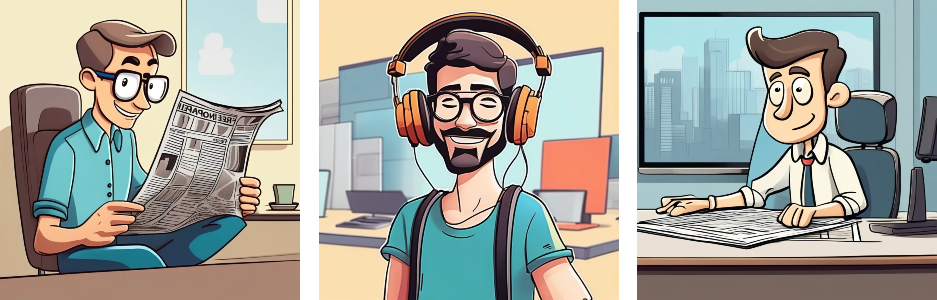
We’ve all been there. You’re firing off a quick text, feeling like the master of efficiency, when bam—autocorrect swoops in like a mischievous gremlin and turns your perfectly crafted message into a word salad of epic proportions. Suddenly, “I’m grabbing coffee” becomes “I’m grabbing a coffin,” and your boss thinks you’re planning a vampire-themed side hustle. Let’s dive into the hilarious chaos of autocorrect fails and why our phones seem to have a personal vendetta against us.
Picture this: you’re texting your mom about dinner plans. You type, “Can you pick up some chicken?” Innocent enough, right? But autocorrect, that sneaky saboteur, decides “chicken” is boring and swaps it for “chickens.” Plural. Okay, fine, maybe you want multiple chickens. But then, in a plot twist worthy of a soap opera, it corrects again to “chickenshit.” Suddenly, you’re asking your sweet, pie-baking mom to pick up something very different from the grocery store. Cue the awkward follow-up call where you explain you’re not trying to start a farmyard insult delivery service.
Autocorrect doesn’t just ruin grocery lists; it loves meddling in your love life. I once tried to text a partner, “I miss you, let’s grab dinner tonight.” Romantic, sweet, straightforward. But my phone had other plans. It decided “miss” should be “kiss” and “dinner” should be “diaper.” So, my partner got, “I kiss you, let’s grab diaper tonight.” Not exactly the vibe I was going for. They responded with a “???” and I spent the next 10 minutes convincing them I wasn’t proposing a bizarre role-play scenario.
An Autocorrect favorite playground? Work emails. You’re trying to impress your boss with a polished, “I’ll finalize the report by EOD.” But autocorrect, drunk on its own power, turns “finalize” into “fertilize.” Now your boss thinks you’re planning to sprinkle Miracle-Gro on the quarterly budget. I know someone who accidentally sent, “I’m excited to meat the team” instead of “meet the team.” Spoiler: the team was not thrilled to be invited to a cannibal themed meet and greet.
Is autocorrect powered by a rogue AI with a sense of humor? Or is it just our phones’ way of reminding us they’re in charge? Whatever the reason, these tiny typos have a knack for turning mundane moments into laugh-out-loud disasters. My theory? Our phones are secretly auditioning for a comedy special and we’re the unwilling punchline.
In the end, autocorrect is like that friend who means well but always spills the tea at the worst moment. So, next time your phone turns “congratulations” into “constipations,” just laugh, screenshot it and share it with the world. Because if we can’t beat the autocorrect apocalypse, we might as well enjoy the chaos.
What’s your worst autocorrect fail?


On May 19th, 1999, Star Wars: Episode I – The Phantom Menace hit US cinemas, marking the highly anticipated return of the Star Wars franchise after a 16-year gap since Return of the Jedi.
Directed by George Lucas, the film introduced fans to a new prequel trilogy, diving into the origins of Anakin Skywalker, the Jedi Order and the Sith.
With groundbreaking visual effects, including extensive CGI and the iconic podracing sequence, it was a cultural phenomenon, grossing over $924 million worldwide.
Despite mixed reviews (praised for its visuals but criticized for pacing and characters like Jar Jar Binks) it remains a pivotal moment in sci-fi cinema.
An alligator was spotted recently “knocking” on doors in the Tortuga neighborhood of Lee County, Florida, during the start of alligator mating season.
Video footage from the Lee County Sheriff’s Office showed the alligator approaching front porches, even getting its head stuck in a folding chair at one point.
Deputies and a licensed trapper safely captured the alligator, with no injuries or damage reported.
This behavior is linked to increased alligator activity during mating season (May-June), when males become territorial and may wander into residential areas seeking mates or territory, according to the Florida Fish and Wildlife Conservation Commission.

On May 18th, 1980, Mount St. Helens, a stratovolcano in Washington State, erupted with a force that reshaped the landscape and left a lasting mark on history. After two months of ominous rumblings (earthquakes, steam venting and a growing bulge on its northern flank) the volcano unleashed its fury in a series of three explosive eruptions within 24 hours. This catastrophic event not only altered the region’s geography but also taught scientists and communities about the raw power of nature.
For weeks, Mount St. Helens had been signaling unrest. Starting in mid-March 1980, seismographs detected thousands of small earthquakes, indicating magma movement beneath the volcano. By late March, steam and ash began venting and a noticeable bulge on the north side grew at an alarming rate of up to 6 feet per day. Geologists warned of an imminent eruption, leading to evacuations and restricted access zones. Despite these precautions, the scale of what was to come was unimaginable.
At 8:32 a.m. on May 18th, a magnitude 5.1 earthquake triggered a massive landslide on the north flank, releasing the pressure of the bulging magma chamber. The result was a lateral blast, one of the most powerful in recorded volcanic history, which obliterated everything in its path for 230 square miles. Trees were flattened, rivers choked with debris and a plume of ash soared 15 miles into the atmosphere.
The initial blast was followed by two more eruptions within 24 hours, each sending additional ash and pyroclastic flows across the region. The ash cloud spread across the United States, with deposits reaching as far as the Midwest, disrupting air travel and blanketing communities in a gritty, gray haze.
For local communities, the eruption was a humbling reminder of nature’s unpredictability. Memorials and visitor centers, like the Johnston Ridge Observatory, now stand as tributes to those lost and as educational hubs for future generations.
The May 18th, 1980, eruption of Mount St. Helens remains one of the most studied volcanic events in history. It underscored the importance of preparedness and respect for natural forces, leaving a legacy that continues to inform science and policy today. As we reflect on that fateful day, we’re reminded of both the destructive power of the Earth and its capacity for renewal.

 The Social Pie Network!