Daily Throwback @ The Pie!

On February 7th, 1964, a pivotal moment in music history unfolded as the British band The Beatles (John Lennon, Paul McCartney, George Harrison, and Ringo Starr) landed at New York’s John F. Kennedy International Airport (JFK), marking their first arrival in the United States. This event ignited Beatlemania on American soil and forever changed popular culture.

The Fab Four boarded Pan Am Flight 101 (the Yankee Clipper) from London Heathrow earlier that morning, accompanied by manager Brian Epstein, roadies and a contingent of journalists. The plane touched down at JFK around 1:20 p.m. local time. What awaited them was unprecedented hysteria: thousands of screaming fans crowded the arrivals area, waving signs, banners and causing near-chaos. Police and barriers were needed to manage the crowd as the band stepped off the plane in their signature mod suits and mop-top haircuts.

The visit was short but explosive. Two days later, on February 9th, they made their legendary debut on The Ed Sullivan Show, performing to an estimated 73 million viewers (about 40% of the U.S. population at the time). The screams from the studio audience were so intense that the band’s playing was barely audible on TV. They followed with a concert at the Washington Coliseum (February 11th) and shows at Carnegie Hall (February 12th), before heading back to England on February 22nd.

What a day in history. The day that America truly met The Beatles!

A True Legend…

84 year old Linda Sinrod, a true legend in women’s ice hockey, has officially retired after an inspiring career that made her the oldest female ice hockey player in the world, as recognized by Guinness World Records.

She played her final game on April 7, 2025, at the age of 84 years and 198 days, suiting up for team Gray in the Capitals Women’s Hockey League in Arlington, Virginia. The game ended in a 5-2 loss, but the milestone marked the end of an extraordinary run on the ice.

Follow THIS LINK to read the full story!

Daily Prompt @ The Pie!

Daily writing prompt
The most important invention in your lifetime is…

As I sit here on this chilly February morning sipping coffee and scrolling through my phone (ironically), I can’t help but think about how one single invention has reshaped pretty much everything about daily life.

If I had to pick the most important invention I’ve witnessed and used (from my childhood in the ’80s or ’90s through today) it’s hands down the smartphone.

Sure, there are tons of game changers I’ve seen emerge: the World Wide Web exploding in the ’90s, social media connecting the world (for better or worse), GPS turning paper maps obsolete, streaming killing cable TV, mRNA vaccines or even CRISPR gene editing promising to rewrite biology. All incredible. But nothing has woven itself so completely into every corner of existence like the smartphone.

Remember flip phones and texting with T9 predictive input? Smartphones turned messaging into instant, multimedia conversations. Video calls (FaceTime, Zoom) kept families connected during tough times—like when folks couldn’t travel. In rural spots like where I live, where distances matter, it’s a lifeline.

Google in your pocket means instant answers to any question. Apps for banking, shopping, learning (Duolingo, Khan Academy), job hunting, or even remote work exploded access. For someone in a small town, that’s huge—no more driving hours to a library or store for basic info.

Streaming music/movies, fitness trackers, health apps monitoring heart rate or sleep, ride-sharing (Uber), food delivery… the list goes on. During the pandemic, smartphones were our window to the world when everything shut down.

Over 7 billion people now have mobile phones, many smartphones in developing countries leapfrogging old tech entirely. It’s boosted economies, education, activism (think Arab Spring or local community organizing), and even small businesses here in the Southern United States via Facebook Marketplace or Etsy.

It’s not just an invention—it’s the platform that enabled the others to thrive in everyday hands.

Daily Throwback @ The Pie!

On February 6th, 1982, a group of civil rights activists and supporters began a significant 140 mile protest march from the Pickens County Courthouse in Carrollton, Alabama, to the state capitol in Montgomery. This event, often called the Carrollton to Montgomery March (or Pilgrimage), marked a key moment in the ongoing struggle for voting rights in the United States during the early 1980s.

The march was organized primarily by the Southern Christian Leadership Conference (SCLC), led by Rev. Joseph Lowery (its president at the time), along with support from other civil rights groups and leaders. It was a direct response to the controversial conviction and imprisonment of two Black women activists from Pickens County:

Maggie Bozeman, a 51 year old teacher and local NAACP chapter president.

Julia Wilder, a 69 year old SCLC officer.

In 1979, these women (known as the “Carrollton Two”) were convicted of voter fraud by an all white jury for helping elderly, illiterate Black voters mark their ballots during an election. Many viewed the charges as retaliatory and racially motivated, part of broader efforts to suppress Black political participation in rural Alabama. The women began serving their sentences in January 1982 after appeals failed, prompting outrage and calls for justice. Their case highlighted persistent barriers to voting despite the 1965 Voting Rights Act.

The march deliberately echoed the historic 1965 Selma to Montgomery marches, with participants re-enacting parts of that route and crossing the Edmund Pettus Bridge in Selma around Valentine’s Day (February 14th), where thousands gathered.

By the time marchers reached Montgomery on February 18th & 19th, 1982, the crowd had grown to an estimated 3,500–5,000 people rallying at the state capitol steps. Chanting, singing freedom songs and speeches emphasized unity and persistence.

This march stands as one of the longest civil rights pilgrimages in the South since 1965, symbolizing continued resistance against voter suppression in the post-Civil Rights era.

Caviar At Mcdonald’s?

McDonald’s just announced this fun, over-the-top Valentine’s Day promo in their official press release on February 2, 2026.

It’s not actually adding caviar to restaurant menus (no drive-thru caviar nuggets anytime soon 😅). Instead, it’s a free, online-only, limited-edition giveaway of McNugget Caviar kits to celebrate the viral trend of pairing Chicken McNuggets with fancy caviar.

Some Details:

Drop date & time: Tuesday, February 10, 2026, at 11 a.m. ET

Where: Exclusively at McNuggetCaviar.com — the site is already live with a countdown timer ticking down to the drop. Supplies are super limited (first-come, first-served, expected to go fast), and it’s free—no purchase needed.

What’s in each kit? See Below.

1-ounce tin of premium Baerii Sturgeon caviar (branded as “McNugget Caviar,” from partner Paramount Caviar—normally a luxury item worth ~$85+ standalone)

Crème fraîche

A mother-of-pearl caviar spoon (for that extra bougie touch)

A $25 McDonald’s Arch Card gift card (perfect for grabbing a big box of nuggets to top with the caviar)

Will you be purchasing this?

Click THIS LINK for more on this story!

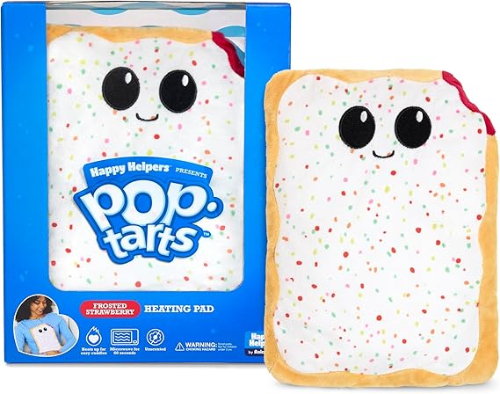
You Like Pop Tarts?

Well then, we have something for you! Don’t eat it, though?

Get some relief! Sore shoulders? Back pain? Cozy up with this frosted Pop Tarts cutie! Heat it up for body pain relief and cordless comfort, the cutest companion to toss in your bag of travel essentials.

Take Care Of You. The Pop Tarts heating pad adds a sweet twist to self care, perfect for recovery days, cozy vibes, get well gifts, or gifts for women and men who deserve a little extra comfort.

 No wires, no plugs, this Pop Tarts heating pad keeps it old school. Just microwave and melt into a frosting fueled snuggle, the coziest hot compress ever.

Click THIS LINK to order one!