Ladies and Gentlemen, we’d like to tell you about Keontrai Floyd from New Haven, Connecticut.
As a teenager who endured homelessness for eight years, Floyd turned his struggles into a source of motivation to give back. In 2024, during the holiday season, he donated $2,000 worth of Christmas gifts to children at New Reach, the same shelter that once supported his family. His selfless act earned him an official citation from the New Haven Board of Alders on March 19th, 2025, recognizing his compassion and generosity.
Floyd’s story reflects a powerful journey of resilience. He described his actions as a way to honor his younger self, closing a chapter of hardship by ensuring other kids in similar situations could experience joy. His message to youth (focus on making the best decisions, even when immediate opportunities are limited) underscores his transformation into a role model. This kind of narrative shows how personal adversity can fuel positive impact, turning a teen from a place of struggle into a community hero.
A Virginia man turned a routine errand into a life changing event when he won a $250,000 lottery prize.
After getting new tires for his vehicle, he stopped at Royal Gas Station on West 14th Street in Front Royal and bought a few scratch off tickets. One of them, a Black Diamond Dazzler game, revealed the top prize.
The odds of winning this prize were 1 in 1,020,000, making his spontaneous decision remarkably fortunate. This win marked the first top prize claimed in the Black Diamond Dazzler game, which launched on March 4th, 2025, according to the Virginia Lottery.
On March 21st, 1963, the United States marked the end of a storied chapter in its penal history when the federal penitentiary on Alcatraz Island (famously known as “The Rock”) officially closed its doors.
Located in the chilly, treacherous waters of San Francisco Bay, Alcatraz had long been synonymous with isolation, impenetrability and the incarceration of some of America’s most notorious criminals. Its closure after nearly three decades of operation signaled a shift in the nation’s approach to punishment and prison management, leaving behind a legacy that continues to captivate historians, tourists and storytellers alike.
Alcatraz Island’s history as a place of confinement dates back to the 19th century, when it served as a military fort and prison. However, it was in 1934, during the height of the Great Depression and the era of organized crime, that the federal government transformed it into a maximum-security penitentiary. Designed to house the most dangerous and escape-prone inmates, Alcatraz quickly earned its reputation as an inescapable stronghold. Surrounded by swift currents and frigid waters, the island was a natural barrier, reinforcing the notion that no prisoner could flee its grasp.
Over the years, Alcatraz became home to infamous figures like Al Capone, George “Machine Gun” Kelly, and Robert Stroud, the so-called “Birdman of Alcatraz.” Its strict regimen, limited privileges, and remote location made it a symbol of unrelenting justice. This was the place where society’s worst were sent to be forgotten.
By the early 1960s, however, the cracks in Alcatraz’s formidable facade began to show. The decision to shutter the prison was driven by a combination of practical and economic factors. The island’s aging infrastructure, battered by salty air and harsh weather, required constant and costly repairs. Supplying the prison with essentials like food, water, and fuel was another logistical nightmare, as everything had to be ferried across the bay. Estimates at the time suggested that maintaining Alcatraz cost three times more per prisoner than other federal facilities.
Beyond the financial burden, the penitentiary’s purpose was increasingly questioned. The harsh conditions and psychological toll of isolation didn’t align with emerging ideas about rehabilitation in the penal system. The famous escape attempt of June 1962 (when inmates Frank Morris and the Anglin brothers vanished using a raft made from raincoats, leaving behind dummy heads in their beds) also exposed vulnerabilities in Alcatraz’s “escape-proof” reputation. Though their fate remains a mystery, the incident underscored the prison’s limitations.
On March 20th, 1963, the last 27 prisoners were transferred off the island, and the following day, Attorney General Robert F. Kennedy officially announced the closure. After 29 years of operation, Alcatraz stood silent, its cells empty and its legacy cemented.
The closure of Alcatraz didn’t mark the end of its story. In the years that followed, the island took on new roles. From 1969 to 1971, it was occupied by Native American activists protesting federal policies, an event that drew national attention and left a lasting imprint on the island’s cultural significance. Eventually, Alcatraz became part of the Golden Gate National Recreation Area, managed by the National Park Service. Today, it’s one of San Francisco’s most popular tourist attractions, drawing millions who wander its eerie corridors and ponder the lives once confined there.
As we look back from here, Alcatraz remains a haunting reminder of a bygone era, its silhouette against the San Francisco skyline a testament to a time when isolation was the answer and escape was the ultimate dream.
Bruce Springsteen won an Academy Award for Best Original Song with “Streets of Philadelphia.” Written for the groundbreaking film Philadelphia, the haunting ballad captured the emotional weight of the AIDS epidemic, showcasing Springsteen’s ability to blend raw storytelling with social resonance. A powerful moment in music and film history.
Bonus Slice +++
The Year: 1952
History was made at Cleveland Arena with The Moondog Coronation Ball, widely regarded as the first rock and roll concert. Organized by legendary DJ Alan Freed, the event showcased talents like Paul Williams and the Hucklebuckers, igniting a cultural revolution that would shape music for decades to come.
DoorDash has recently introduced a “Buy Now, Pay Later” (BNPL) option for its customers in the United States through a partnership with Klarna, a popular BNPL service. This new feature allows users to split the cost of their DoorDash orders (whether for food, groceries, or other items) into more manageable payments. Specifically, customers can choose to pay in full at checkout, divide the total into four equal interest-free installments, or defer payment to align with their payday schedules. This move is designed to offer greater financial flexibility, particularly for larger orders like grocery hauls or retail purchases available through DoorDash’s platform.
The initiative builds on DoorDash’s earlier adoption of BNPL in Australia, where it partnered with Afterpay in 2022 to offer similar installment options. In the U.S., this partnership with Klarna also extends to covering DashPass subscriptions, DoorDash’s membership program that provides benefits like free delivery and reduced fees. DoorDash has framed this as a way to enhance convenience and accessibility, aiming to appeal to its millions of users by making it easier to budget for both everyday takeout and bigger-ticket items.
Scalpers have been exploiting the high demand for Department of Motor Vehicles (DMV) appointments in Miami-Dade County by hoarding free slots and reselling them for as much as $250 each.
These individuals or groups use tactics like bots and fake accounts to secure large numbers of appointments through the online booking system, then turn around and sell them to residents desperate to avoid long wait times.
The Miami-Dade County Tax Collector’s Office, led by Dariel Fernandez, uncovered this network and is actively working to stop it. They’ve reported that the practice has been particularly rampant since the county took over driver’s license services from the state, with over 200 suspicious appointments flagged at a new downtown Miami location alone in its first few weeks.
Fernandez has made it clear that his office won’t honor appointments obtained through this kind of abuse and is pushing for a new ordinance to make selling DMV appointments illegal, potentially carrying a $500 fine or up to 60 days in jail. The ordinance has passed its first reading and is set to be finalized soon.
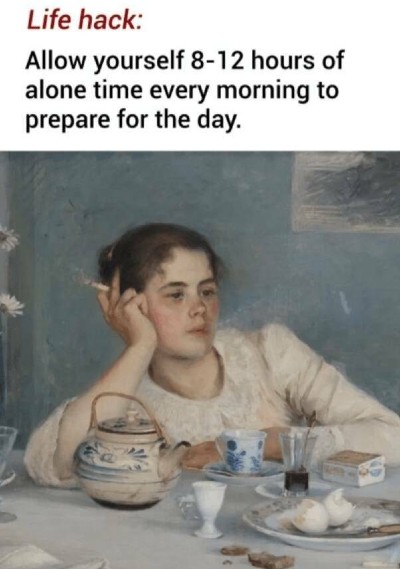
A Dayton, Ohio photographer named Marissa Alcorn stumbled upon an incredible find at a local Goodwill store. Initially reluctant to visit the thrift shop after dinner with her fiancé Arron, Marissa was persuaded to take a quick look. As they were about to leave empty-handed, an employee wheeled out a cart, and Marissa spotted the corner of a frame that caught her eye. Priced at just $2.99, she found the painting itself unappealing but decided to buy it anyway, thinking it might be useful for her photography studio or home, both of which are largely furnished with thrifted items.
What started as a casual purchase turned into a remarkable discovery. After some research and authentication through an auction house in Cincinnati, the painting was revealed to be the work of a noted American impressionist painter. Pre-bidding began at $600, and on auction day, a 30-second bidding war drove the price up to $2,300.
Marissa, who had been nervous yet hopeful it might fetch $1,500, was stunned by the outcome. She described it as a “once in a lifetime thing,” doubting she’d ever find such a treasure again. Recently engaged, Marissa and Arron plan to put the unexpected windfall toward their upcoming wedding.
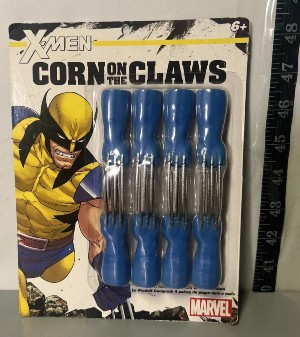
Delve into the world of Marvel with these unique Wolverine “Corn On The Claws” corn cob holders, a must-have for fans and collectors alike.
Crafted with care in Canada, these holders are designed to bring a touch of the comic book hero to your kitchen and dining experience. Perfect for any gathering, these holders are not handmade, ensuring consistency in quality and design.
They are an ideal addition to your collectibles or a playful gift for those who appreciate Marvel’s iconic characters integrated into everyday items.




 The Social Pie Network!